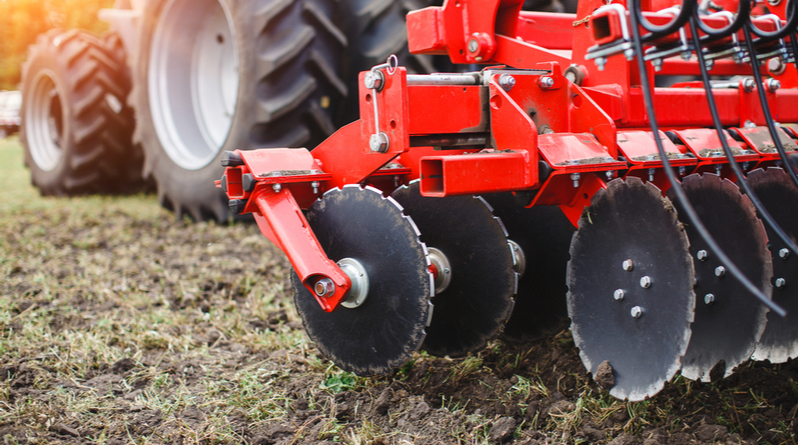
Agricultural Machinery is any machine or tool that is used in the production, harvesting, and care of farm products.
The most common types of equipment and machinery used on farms include tractors, balers, combines, ploughs, mowers, planters, sprayers, and even trailers that are used to transport produce or agricultural production materials.
Universities and colleges in Ireland are offering Agricultural Machinery courses in the following subject areas:
Many Agricultural Machinery courses take place over 1 year to 4 years depending on the course and modules selected. There are also part-time courses and night courses available so you can be sure to fit in your studies no matter what your schedule is like.
Courses will cover theory work through lectures, assignments, tutorials, and taught modules. Assessments will take place continuously with written examinations and practical assignments combined to achieve a qualification.
You could also consider work experience or a work shadow in the industry. It is important to get hands-on work experience, which will increase your chances of securing a job after graduation. If you don't have the opportunity to complete a placement year as part of your course, look for relevant work in the holidays. This may involve going to local commercial farms and asking if they have any extra work or seeing if you could shadow someone who works in farm management. Search for local voluntary projects in your area involving agricultural or environmental work.
Work Experience will not only allow you to obtain a deeper knowledge and understanding of the industry, but it will also give you a chance to do some essential networking with other industry professionals and gain valuable contacts for the future.
After completing a course in Agricultural Machinery you will be able to get started in a career that uses specific knowledge of agriculture and agricultural machinery mechanics.
There are diverse opportunities available for agriculture graduates. For example, you can work in areas such as farm management, the service, and supply industries, sales, research, or advisory and consultancy work. Opportunities are available in both the public and private sectors within the country and abroad.
Typical employers include agricultural and agri-pharmaceutical consultancies, agricultural machinery firms, environmental consultancies, farm management, and commercial companies, and food processing companies.
Working hours will depend on whether you are employed by a company with set business hours or if you are contracted to various facilities or companies. The hours are usually full time and typically include regular extra hours which may include weekends and holidays but this will also largely depend on your position.
After completing a course in Agricultural Machinery you may choose to pursue further study in a specialist field to increase your knowledge base and skill set. Postgraduate study can also be used as a means to change career focus or to gain professional qualifications required to practice in certain career areas such as crop science and management, animal technology, and agricultural science.
Or you may be interested in a more technical career and look into other types of engineering such as aeronautical engineering, computer-aided engineering, engineering science, manufacturing engineering, mechanical engineering, or nuclear engineering.
What is the importance of good Agricultural Machinery and maintenance?
Carefully chosen machinery can allow crops to be grown and harvested with minimum-to-no soil disturbance, ensure that the soil surface remains protected by an organic cover, manage crop rotations to enhance soil health, and conserve crop nutrients. The type and size of machinery made available to farmers are also crucial.
The three major benefits of having quality Agricultural Equipment are reduced production time, increased efficiency, and reduced downtime.
What skills could be helpful for a career in the design, maintenance, or use of Agricultural Machinery?
For any career that makes use of, designs, or maintains Agricultural machinery you will need to show a high level of technical and scientific knowledge and the ability to apply this knowledge to practical problems.
You should have good oral communication skills and confidence in dealing with a range of people, including clients, contractors, designers, directors, and plant operators.
Precise and concise written communication skills, the ability to work well within a team, and the ability to work under pressure are all very important in any position.
Explore your options here